photography......
everyone loves to give a nice pose at a camera.everyone includes me too oh sorry we. want to look at my photography:

just kidding it was taken by someone else...........................
let me show you some pictures:


A photographer records events and tells stories using images. He or she takes pictures of people, places, events, and objects. Photographers often specialize in a type of photography. Portrait photographers take pictures of people in studios or on-site at various locations. Some take school portraits or baby pictures. Commercial photographers take pictures that are used in books, advertisements, and catalogs.
Scientific photographers use their knowledge of scientific procedures to record images of scientific or medical data.
Photojournalists, also known as news photographers, capture images that are usually used to illustrate stories on television news broadcasts or in newspapers or magazines. Aerial photographers take pictures of landscapes and structures from aircraft. Fine arts photographers sell their photographs to the public as pieces of art.
Many people who work in this field are freelancers who operate their own businesses. Their job description includes tasks that business owners must tend to. This includes promoting the business to clients, purchasing supplies, hiring and supervising employees, and taking care of financial matters related to operating a business.
Quick Facts
- Photographers earned a median annual salary of $34,070, or $16.38 hourly, in 2016.
- In 2014, there were over 125,000 people working in this occupation.
- More than half of all photographers are self-employed as freelance photographers.
- Of those who do not work for themselves, most work for companies that provide photographic services. Others work in the television broadcasting and newspaper publishing industries.
- The job outlook for photographers who do not choose to freelance is poor. The U.S. Bureau of Labor Statistics predicts that employment will grow more slowly than the average for all occupations through at least 2024. However, freelance photographers will fare quite well.

- It is one of the best cameras to take pictures with.
 if you are not allowed to have DSLR so my opinion i mean our opinion is a Polaroid camera is the best for you.
- As a photographer, it can be both fun and rewarding to experiment with various formats of photography, particularly using Polaroid cameras and film.Not only do photographers love the Polaroid’s nostalgic appearance and unpredictable nature, but the way in which images are instantly produced is also an exciting bonus!Today we’re going to talk about Polaroid photography tips and tricks, so whether you’re a beginner wanting to try the format first-hand, or even a more seasoned professional looking to pick up some additional advice – trust us, you’ll find all you need to know below!
Practice digital first
One thing you might already know about Polaroid film is that it is becoming increasingly rare, with packs of film for Polaroid cameras now costing a lot more than they used to! Therefore, it’s important to make sure your basic knowledge of capturing great images is up-to-speed before you invest your money on the format. After all, who wants to produce unusable photos and watch their hard-earned dollars go down the drain?If you’re confident with your photography skills when using a DSLR or even an analogue / film camera, then go ahead – you’re certainly ready to give Polaroid photography a go.
Get to know your Polaroid camera
This is the same advice you’d hear when using any other camera for the first time, however it’s important to stress that a Polaroid camera is nothing like your SLR. There will be buttons and / or symbols that you’ve never heard of before, along with limited functions and differing requirements.If you’ve purchased a Polaroid camera brand-new (for example, one of the modern Fujifilm versions or even one from Lomography.com), then chances are it will come with its own handy user manual. Be sure to read this first to truly understand the various camera functions and the process of successfully capturing a photo.If your Polaroid camera is older (or perhaps was given to you, found in a thrift shop etc.) and a user manual isn’t available, try searching your specific camera model on Google to see how it’s done!
Lighting is everything
One of the aspects of Polaroid photography that most people tend to struggle with is lighting, along with the result of the photo being too underexposed or overexposed – a.k.a too light or too dark. You might be so excited to capture a stunning summer scene, only to have the image turn out so white that you can’t make out your subject at all. Alternatively, an image standing under the shade of a tree might seem like a good idea at the time, but the final image may result in shadows so dark that you just can’t make out the photo’s content…so disappointing!We’ve all been there, so it all just comes back to experience, common sense, and understanding your camera’s light meter function (if it has one). The popular Fujifilm Instax models have a dial above the lens which contains several symbols to depict the level of lighting. A light will appear on the symbol that best matches the lighting conditions, according to the Polaroid camera (for example, cloudy, indoors, or sunny). You’ll need to adjust your dial to appropriately depict your current lighting condition. Then, it’s fingers crossed for a great outcome!If your model doesn’t have this option (or you simply don’t trust your dial – it’s not always correct unfortunately!) then this is where common sense comes into play. Avoid photographing subjects in direct sunlight and likewise it is best to avoid capturing photos in dark locations lacking in natural light.
Keep cropping in mind
Unlike other camera models, film cameras such as Polaroids usually can’t zoom, therefore you’ll want to ensure that you’ve already ‘cropped’ your scene in the viewfinder before hitting the shutter release. Get closer to your subject to zoom in more, or stand a little further back if you’re having trouble fitting the whole scene into the viewfinder. Don’t be afraid to play around with orientation too!Experiment with different film
While film might be on the expensive side (it works out at about $1 per Polaroid photo at its cheapest), it can still be fun and worthwhile to mix things up with various types of Polaroid film. Sites such as eBay and Amazon have an array of exciting options, including everything from patterned and colored borders, to black and white or color-infused film.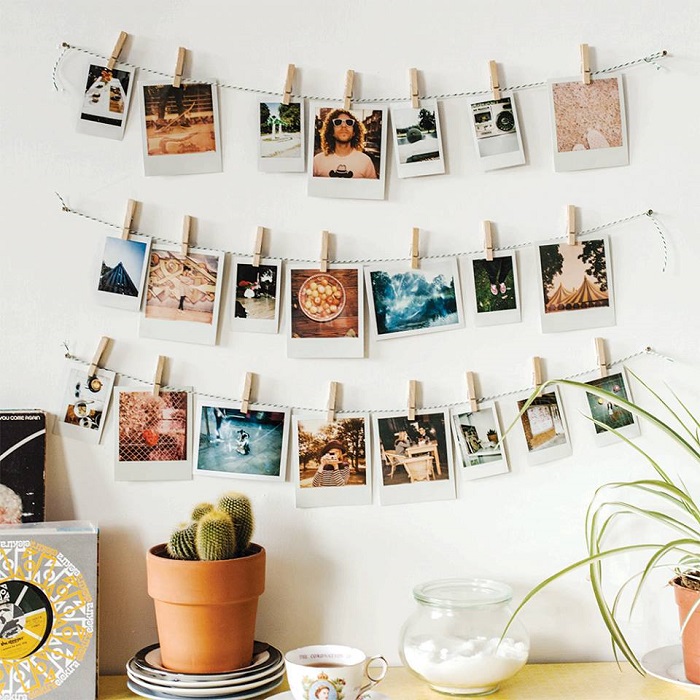
Get creative with your final result
One of the best things about Polaroid images is their small and portable size – depending on what size film you use, your images could be as small as a business card!Rather than setting your photos aside to forget about over time, why not embrace them in a range of different ways? You can use your phone camera or other digital camera to capture an arty image of your Polaroid, or why not peg some up on string to use as a decorative photo garland? The opportunities are endless! (“Love love love” by @ana.yes.yes. via Instagram, instax mini 8, white.)Have you ever drooled over the captivating photos shared by your favourite lifestyle blogger? Or secretly coveted the photography skills of your artsy friend? You want to join in the fun, but you’re not quite sure you have what it takes to create instant photo magic. We’ve got some welcome news: With instax mini 8, even photography beginners can produce dazzling, blog-worthy images.And while many of us have become accustomed to using our smartphone cameras to capture life’s moments, instant photography offers you a classic, timeless way to snap a one-of-a-kind shot and enjoy a tangible keepsake to collect and share with others.
Ready to get started?
Check out these 7 important tips on how to use your instax mini 8:1. Power Up.
Before putting in the film, make sure you insert two AA alkaline batteries in order to operate your camera.2. Load the Film.
Take your packet of film out of the package, and insert into the back of your camera, matching the yellow stripe on the film with the yellow stripe on the camera. Close the back cover. (Note: Light and heat can compromise your film. Keep it in a cool place out of direct sunlight.)3. Turn It On.
Push the front button to pop out the lense and turn on the camera.4. Find the Best Lighting.
The instax mini 8 automatically suggests the best brightness for taking a picture, and informs you of the suitable setting by lighting the corresponding lamp. Turn the brightness adjustment dial to the position of the appropriate icon. (“You are cool no matter what,” by @zefzf via Instagram)
5. Find Your View.
Use the viewfinder to help see your subject.6. Get Creative.
 (instax prints, by @caliallstaring via Instagram)
7. Use High-Key Mode.
Experiment with this awesome feature by manually setting your ins tax camera to the high-key mode to take photos with a softer impression.Alfred Eisenstaedt
1898 – 1995Eisenstaedt was a German photojournalist most famous for his much celebrated photograph of V-J Day in Times Square, New York.1. “It is more important to click with people than to click the shutter.”Alfred Stieglitz
1864 – 1946Stieglitz was an American photographer internationally recognised as being a pioneer of modern photography.2. “In photography there is a reality so subtle that it becomes more real than reality.”3. “Wherever there is light, one can photograph.”Anne Geddes
1956Geddes is known for her distinctive, stylised photographs of babies, which often incorporate floral imagery.4. “The best images are the ones that retain their strength and impact over the years, regardless of the number of times they are viewed.”5. “I think that emotional content is an image’s most important element, regardless of the photographic technique. Much of the work I see these days lacks the emotional impact to draw a reaction from viewers, or remain in their hearts.”Annie Leibovitz
1949Leibovitz is an American portrait photographer who made a name for herself in her ten-year role as chief photographer for Rolling Stone magazine.6. “The camera makes you forget you’re there. It’s not like you are hiding but you forget, you are just looking so much.”Ansel Adams
1902 – 1984Adams is a photographer who needs no introduction! He is widely recognised as being one of the greatest landscape photographers, and greatest photographers, ever known.7. “You don’t take a photograph, you make it.”8. “Twelve significant photographs in any one year is a good crop.”9. “There are always two people in every picture: the photographer and the viewer.”10. “A good photograph is knowing where to stand.”
August Sander
1876 – 1964Sander – a German portrait and documentary photographer – has been described as ‘the most important German photographer of the twentieth century.’11. “In photography there are no shadows that cannot be illuminated.”Berenice Abbott
1898 – 1991American photographer Abbott, had a career spanning more than 60 years. Her black and white images of New York provide an extensive record of the city’s architecture.12. “Photography helps people to see.”13. “Photography can only represent the present. Once photographed, the subject becomes part of the past.”Burk Uzzle
1938Uzzle is an American documentary photographer. He still holds the title of the youngest photographer ever to be hired by Life Magazine.14. “Photography is a love affair with life.”Charlie Waite
1949Waite is an award-winning English landscape photographer. His images have a painterly impression in their use of light and shade.15. “A landscape image cuts across all political and national boundaries, it transcends the constraints of language and culture.”David DuChemin
DuChemin is a humanitarian, nature, and adventure photographer. His work takes him to far-flung locations across the globe.16. “Photographing a culture in the here and now often means photographing the intersection of the present with the past.”Diane Arbus
1923 – 1971Arbus was a documentary photographer famed for her images of marginalised peoples, particularly circus performers.17. “A photograph is a secret about a secret. The more it tells you the less you know.”Don McCullin
1935McCullin is a documentary photographer known for his war images, and images of urban and impoverished lifestyles.18. “Photography for me is not looking, it’s feeling. If you can’t feel what you’re looking at, then you’re never going to get others to feel anything when they look at your pictures.”Dorothea Lange
1895 – 1965Lange was a photojournalist made famous by her photographs taken during the Depression-era in the United States.19. “Photography takes an instant out of time, altering life by holding it still.”20. “One should really use the camera as though tomorrow you’d be stricken blind.”21. “A camera is a tool for learning how to see without a camera.”22. “To know ahead of time what you’re looking for means you’re then only photographing your own preconceptions, which is very limiting, and often false.”
Edward Steichen
1879 – 1973Steichen is known for producing the first fashion photographs ever published. The images of gowns were taken for Art et Décoration magazine in 1911.23. “A portrait is not made in the camera but on either side of it.”Edward Weston
1886 – 1958Weston is famed as being one of the most influential American photographers of the twentieth century. He focused mainly on photographing landscape and lifestyle in the west of the US.24. “To consult the rules of composition before making a picture is a little like consulting the law of gravitation before going for a walk.”Ellen Von Unwerth
1954Unwerth is known for her distinctively erotic style of fashion photography. She has shot for a number of high-profile fashion magazines, such as Vogue.25. “I like to photograph anyone before they know what their best angles are.”Elliott Erwitt
1928Erwitt is a master of capturing ‘The Decisive Moment’; his street photography is known for it’s heart-warming charm.26. “To me, photography is an art of observation. It’s about finding something interesting in an ordinary place… I’ve found it has little to do with the things you see and everything to do with the way you see them.”27. “It’s about reacting to what you see, hopefully without preconception. You can find pictures anywhere. It’s simply a matter of noticing things and organising them. You just have to care about what’s around you and have a concern with humanity and the human comedy.”28. “The whole point of taking pictures is so that you don’t have to explain things with words.”Ernst Haas
1921 – 1986Photojournalist Haas was one of the first photographers to use colour in his work. His impressive career included becoming President of Magnum Photos, and publishing one of the most successful photography books ever.29. “I am not interested in shooting new things – I am interested to see things new.”30. “There is only you and your camera. The limitations in your photography are in yourself, for what we see is what we are.”
Eve Arnold
1912 – 2012Arnold was an award-winning photojournalist and member of Magnum Photos and published twelve photographic books in total.31. “If a photographer cares about the people before the lens and is compassionate, much is given. It is the photographer, not the camera, that is the instrument.”Helmut Newton
1920 – 2004Newton’s sexually charged fashion photography remains influential to this day.32. “My job as a portrait photographer is to seduce, amuse and entertain.”Henri Cartier-Bresson
1908 – 2004Cartier-Bresson is widely regarded as one of the greatest photographers of all time. He is known as the father of photojournalism, and coined the term ‘The Decisive Moment’.33. “Your first 10,000 photographs are your worst.”34. “The photograph itself doesn’t interest me. I want only to capture a minute part of reality.”35. “To me, photography is the simultaneous recognition in a fraction of a second of the significance of an event.”36. “To photograph is to hold one’s breath, when all faculties converge to capture fleeting reality. It’s at that precise moment that mastering an image becomes a great physical and intellectual joy.”Imogen Cunningham
1883 – 1976Cunningham’s work was particularly forward-thinking and experimental for its time. Her extensive work included shots of flowers, portraits and nudes.37. “Which of my photographs is my favourite? The one I’m going to take tomorrow.”Joe McNally
1952McNally is an internationally acclaimed photographer known for his work with National Geographic Society, and for his collection of photographs showing Ground Zero in New York in the wake of 9/11.38. “Don’t pack up your camera until you’ve left the location.”Man Ray
1890 – 1976Ray was a fashion and portrait photographer who was active in the Surrealist art movement. He’s best known for his avant-garde photography.39. “Of course, there will always be those who look only at technique, who ask ‘how’, while others of a more curious nature will ask ‘why’. Personally, I have always preferred inspiration to information.”Martin Parr
1952Parr’s documentary photography captures the humour of every day British life. He is aptly described as a ‘chronicler of our age’.40. “With photography, I like to create a fiction out of reality. I try and do this by taking society’s natural prejudice and giving this a twist.”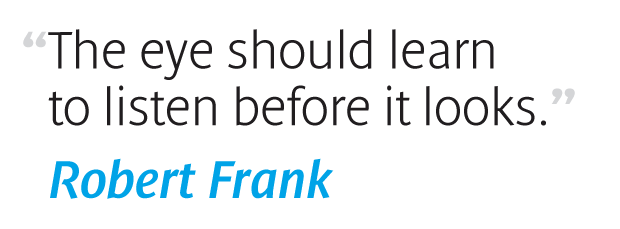
Paul Caponigro
1932Caponigro is known as one of American’s leading landscape photographers, although he also photographs still life.41. “It’s one thing to make a picture of what a person looks like, it’s another thing to make a portrait of who they are.”Philip Jones Griffiths
1936 – 2008Jones Griffiths was a Welsh photojournalist. He is famed for his coverage of the Vietnam war.42. “… we are there with our cameras to record reality. Once we start modifying that which exists, we are robbing photography of its most valuable attribute.”Rankin
1966Rankin is an English portrait and fashion photographer whose work has been widely shown in popular media.43. “There’s a time when people say your work is revolutionary, but you have to keep being revolutionary. I can’t keep shooting pop stars all my life. You have to keep changing, keep pushing yourself, looking for the new, the unusual.”Robert Capa
1913 – 1954Capa was a Hungarian photojournalist known for his war photography. He is perhaps best known for photographing key events during World War II, including the D-Day landings.44. “If your pictures aren’t good enough, you aren’t close enough.”45. “The pictures are there, and you just take them.”Robert Frank
1924Frank is best known for his book The Americans, which was very influential, providing an outsider’s view of American society.46. “The eye should learn to listen before it looks.”Robert Mapplethorpe
1946 – 1989Mapplethorpe was an American photographer who became known for his large-scale photographic images. His series of homoerotic portraits were subject to much controversy.47. “The more pictures you see, the better you are as a photographer.”Sally Mann
1951Mann is a renowned American photographer. Her abstract, black and white photographs cover varied subjects including landscapes and portraits.48. “Photographs open doors into the past, but they also allow a look into the future.”Tim Walker
1970Walker is a British fashion photographer whose work has been included in such highly-acclaimed titles as Vogue.49. “Only photograph what you love.”W Eugene Smith
1918 – 1978Smith is best known for his hard-hitting photographs of World War II.50. “Photography is a small voice, at best, but sometimes one photograph, or a group of them, can lure our sense of awareness.”Which is your favorite quote? Let us know by leaving a comment.
now i gave you all the information and my suggestions for the best tips and cameras...........................let's see what you are up to. we want to tell you that how i got all this information by so much hard work i mean we, i always forget my group members. let us introduce ourselves: i am Haiqa and then i have Mommina after that i have Noor- Amna, Maham , Aliza and Fatima Imran and that is our group. hope you like me i mean us. bye............


No comments:
Post a Comment